By Todd Neale, Staff Writer, MedPage Today
Published: July 01, 2010
Reviewed by Dori F. Zaleznik, MD; Associate Clinical Professor of Medicine, Harvard Medical School, Boston and Dorothy Caputo, MA, RN, BC-ADM, CDE, Nurse Planner
People who consume the amount of fructose found in two-and-a-half regular soft drinks a day appear to have a higher risk of hypertension, a cross-sectional study showed.
Consumption of at least 74 grams per day was associated with 26% to 77% greater odds of crossing various thresholds of elevated blood pressure (P<0.05 for all), compared with lower levels of consumption, according to Diana Jalal, MD, of the University of Colorado Denver, and colleagues.
"Limiting fructose intake is readily feasible, and, in light of our results, prospective studies are needed to assess whether decreased intake of fructose from added sugars will reduce the incidence of hypertension and the burden of cardiovascular disease in the U.S. adult population," they wrote online in the Journal of the American Society of Nephrology.There has been a recent increase in the consumption of fructose in developed nations due primarily to the addition of table sugar or high fructose corn syrup to soft drinks, bakery products, fruit drinks, dairy desserts, and candies.
At the same time, the prevalence of hypertension has been rising. However, epidemiological studies have yielded conflicting results as to an association between the two trends.
To explore the issue, Jalal and her colleagues used data from 4,528 adults without a history of hypertension included in the National Health and Nutrition Examination Survey (NHANES) from 2003 to 2006.
The majority (61%) had a systolic blood pressure of less than 120 mm Hg. Another 30% were prehypertensive (systolic pressure of 120 to 139 mm Hg).
The rest of the participants had either stage 1 or stage 2 hypertension (6% and 2%, respectively).
Fructose intake was determined through a self-administered dietary questionnaire. Consumption of natural fruits was excluded to isolate intake of added sugar.
Median intake was 74 grams a day. Increasing systolic blood pressure was associated with increasing fructose intake, a trend that reached borderline statistical significance (P=0.05).
After adjustment for demographics, comorbidities, physical activity, smoking, total kilocalorie intake, and dietary confounders including total carbohydrate, alcohol, salt, potassium, and vitamin C intake, as well as other factors, fructose intake of 74 grams per day or higher was associated with higher odds of elevated blood pressure at the following thresholds (P<0.05 for all):Additional analyses showed that fructose intake was associated with systolic -- but not diastolic -- blood pressure.
- 135/85 mm Hg: OR 1.26
- 140/90 mm Hg: OR 1.30
- 160/100 mm Hg: OR 1.77
The reason this study, and not some previous studies, found an association between fructose consumption and hypertension could be because of the high level of consumption in the current study, according to Jalal and her colleagues.
In addition, some previous studies looked only at soft drink consumption or included naturally occurring fructose from fruit in their analyses.
There are several possible mechanisms that might explain the positive association between fructose and blood pressure, the authors wrote, "including stimulation of uric acid, inhibition of [the] endothelial nitric oxide synthase system, and stimulation of the sympathetic nervous system, or by directly increasing sodium absorption in the gut."
The study was limited, they wrote, by the inability to establish a causal relationship between fructose and blood pressure using cross-sectional data, the reliance on self-reports, and the possibility of confounding by glucose in the foods assessed on the dietary questionnaire.
The study was supported by grants from the National Institutes of Health.
Jalal reported no conflicts of interest. One of her co-authors is listed as an inventor on several patent applications for lowering uric acid as it relates to blood pressure and metabolic syndrome. He is also author of The Sugar Fix.
Primary source: Journal of the American Society of Nephrology
Source reference: Jalal D, et al "Increased fructose associates with elevated blood pressure" J Am Soc Nephrol 2010; DOI: 10.1681/ASN.2009111111.
Showing posts with label high blood pressure. Show all posts
Showing posts with label high blood pressure. Show all posts
Friday, July 2, 2010
Fructose Linked to High Blood Pressure
Watch not only products with HFCS, but any with sugar, as it can be GMO beet sugar, or any with aspartame, sucralose, rebiana, zevia, truvia, or purvia -

Wednesday, June 30, 2010
"Blood Pressure Care Naturally"
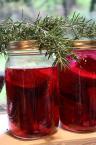
Why beetroot juice lowers blood pressure
LONDON, June 30 (UPI) -- Nitrate content appears to be the reason why beetroot juice lowers blood pressure, researchers in Britain said.Study author Amrita Ahluwalia, a professor of vascular biology at Queen Mary's William Harvey Research Institute, at Queen Mary University of London, said the study demonstrated that the nitrate found in beetroot juice was the cause of its beneficial effects on cardiovascular health by increasing the levels of the gas nitric oxide in the circulation.The study, published online in the American Heart Association journal Hypertension, found blood pressure lowered within 24 hours in people who took nitrate tablets and in people who drank beetroot juice."We gave inorganic nitrate capsules or beetroot juice to healthy volunteers and compared their blood pressure responses and the biochemical changes occurring in the circulation," Ahluwalia said in a statement. "We showed that beetroot and nitrate capsules are equally effective in lowering blood pressure indicating that it is the nitrate content of beetroot juice that underlies its potential to reduce blood pressure."© 2010 United Press International, Inc. All Rights Reserved.
Thursday, April 29, 2010
Garlic Gives You That Sulfur
UPDATE: 20 August, 2010 - Garlic to lower blood pressure
UPDATE: 29 April, 2010 - More on the health benefits of sulfur bearing foods and compounds -
For several decades I've offered clients a garlic supplement that is known for reducing blood pressure. Now it seems that we need to wait for some new recombinant drug because of another medical study that overlooks the natural and known natural remedies.
Sulfur is one of the most important healing molecules we have known of and used in natural therapies for eons. It is mentioned in this 'special form' in my book, "Blood Pressure Care Naturally".
Oh, for the day when these folks get to recall all of the pharmacopoeia that first came from Mother Nature.
Find 30+ posts regarding blood pressure on Natural Health News Read more
Garlic was once used to combat the Black Death, but doctors now claim it can tackle a modern-day epidemic of heart disease.My comment to this article is that it is good information except for the misunderstanding that the researchers focus on standardized supplements rather than food based products. We recommend you consider using the garlic you'll find in the right column, or Immortal Garlic or our specific unique garlic.
Just 12 weeks' treatment with garlic tablets led to a 'significant' cut in blood pressure, slashing the risk of a heart attack or stroke.
Researchers claim people with hypertension, the medical term for high blood pressure, could control their condition better by adding garlic to conventional medication. Read complete article
UPDATE: 29 April, 2010 - More on the health benefits of sulfur bearing foods and compounds -
Lower levels of 'rotten egg' gas (hydrogen sulfide) in blood linked to obesity, type 2 diabetes and poorer circulationOriginally posted in 2008
ScienceDaily (2010-04-28) -- Researchers have for the first time identified a link between blood levels of the gas hydrogen sulfide (a gas more commonly associated with the smell of rotten eggs), obesity and type 2 diabetes. ... > read full article
For several decades I've offered clients a garlic supplement that is known for reducing blood pressure. Now it seems that we need to wait for some new recombinant drug because of another medical study that overlooks the natural and known natural remedies.
Sulfur is one of the most important healing molecules we have known of and used in natural therapies for eons. It is mentioned in this 'special form' in my book, "Blood Pressure Care Naturally".
Oh, for the day when these folks get to recall all of the pharmacopoeia that first came from Mother Nature.
'Fart gas' link to blood pressure
The gas best known for being used in many stink bombs may also control blood pressure, say US researchers.
Small amounts of hydrogen sulphide - a toxic gas generated by bacteria living in the human gut - are responsible for the foul odour of flatulence.
But it seems the gas is also produced by an enzyme in blood vessels where it relaxes them and lowers blood pressure.
The findings in mice may lead to new treatments for high blood pressure, the Science journal reported.
Researchers at Johns Hopkins University, in Maryland, found that the gas is produced in the cells lining blood vessels by an enzyme called CSE.
We know hydrogen sulphide is not good for us at high levels but it seems that at the lower levels in the body it is essential
Professor Amrita Ahluwalia
In mice engineered to be deficient in this enzyme, levels of hydrogen sulphide were almost depleted compared with levels in normal mice.
The CSE-deficient mice also had blood pressure measurements about 20% higher than the normal mice, comparable to serious hypertension in humans.
When the engineered mice were given a drug which relaxes normal blood vessels - methacholine - there was no difference, indicating the gas is responsible for the relaxation.
Treatments
Another gas, nitric oxide, is already known to be involved in control of blood pressure.
Researcher Dr Solomon Snyder said: "Now we know hydrogen sulphide's role in regulating blood pressure, it may be possible to design drug therapies that enhance its formation as an alternative to the current methods of treatment for hypertension."
Professor Amrita Ahluwalia, an expert in vascular pharmacology at Barts and The London Medical School, said: "This study shows that smelly hydrogen sulphide is also likely to have a role in regulating blood pressure and it will be a bit of an impetus for scientists to develop more specific tools to work out what's going on.
"We know hydrogen sulphide is not good for us at high levels but it seems that at the lower levels in the body it is essential."
Dr Allan MacDonald, a reader in pharmacology at Glasgow Caledonian University, said: "Treatments based on hydrogen sulphide could become important in a variety of cardiovascular diseases," he said.
Story from BBC NEWS:http://news.bbc.co.uk/go/pr/fr/-/2/hi/health/7686911.stm
Published: 2008/10/24 © BBC MMVIII
Find 30+ posts regarding blood pressure on Natural Health News Read more
Wednesday, June 3, 2009
High Blood Pressure - Does Race Play a Part?

There are many different things that can put you at a greater risk for high blood pressure. If there is something in your life that makes it hard for your heart to work the way that it should, you are going to experience high blood pressure, even if you are doing some things in a healthy way. However, one of the things that has long been felt by many in the medical community to be a factor in high blood pressure is your race. It has long been thought that there are some genetic factors that make one race more apt to have high blood pressure than another. While this might be true, there are certain things that you should try and do for yourself no matter what race you are.
First of all, a big part of high blood pressure is the foods that we eat. If you come from a racial background that richly celebrates every occasion with meals that are high in fat and cholesterol, your entire family is going to see that they might have problems with high blood pressure. This might be something that is linked to race, because different races celebrate things in different ways, and the traditional cooking is much different from place to place, as well as from race to race. If you belong to a culture that has a tendency to eat foods often that are high in fat, you might want to consider changing the way that you cook on a day to day basis. If you still want to participate in your family functions and eat the foods that everyone else is eating, it is okay as long as this is only practiced in moderation. If you can cook for yourself every single day and eat foods that are low in fat and cholesterol, you are going to have a better chance of lowering your own high blood pressure. You can also encourage your family to use low fat substitutes when they are celebrating. Exercise plays a role as well.
Certain blood pressure conditions are prevalent with certain races. If you are black or Hispanic, make sure you keep your blood pressure in check A number of more serious health conditions can occur if high blood pressure is not addressed, so if you are at risk, monitor it carefully, eat well, and exercise often. By doing these things, you can prevent high blood pressure, no matter what race you may be.
![Reblog this post [with Zemanta]](https://lh3.googleusercontent.com/blogger_img_proxy/AEn0k_trm3ySTNDSs-Bz9BdBBer4RnpxwhZLZY1Uv0_X9olAMEIgfj1_DJMdz29nAG8PEk5Kto8xzhex_Xp_Pjnl5w4o9D-8Go48dZCwjvXFcjMlwEDf-A0ob-EyeHxPIZPmqfuh1ljtdqPciYxgOgdwogU=s0-d)
Friday, May 22, 2009
Today's Drug Promoting Insanity
As I've been saying lately, what we have in the US is medical care, not health care. And the medical care we have ranks very low in comparison to many other countries.
There are many reasons for this poor state of affairs, and here are a few reasons why things are as they are -
And after you've looked over just these three items consider that in 1999, the Institute of Medicine (IOM) issued an alarming report titled "To Err is Human," detailing the toll of preventable medical errors in the U.S; it estimated that up to 98,000 Americans die annually from them.
Comments on this study show that now a decade later as more than 100,000 people are dying from the same cause, as the CDC reports, why aren't the "right" questions being asked.
Are we really hoping for reform in medical care?
There are many reasons for this poor state of affairs, and here are a few reasons why things are as they are -
1. Older people should take anti hypertensive drugs even if they do not have hypertension.
This idea seems to be the brainchild of some medical researchers in the UK. They believe a "polypill" made up of the standard drugs used currently as the cookie cutter treatment for blood pressure will prevent heart disease and stroke.
My choice would be vitamin E and magnesium, plus a more customized individual plan for anyone concerned about these issues.
2. The anti-cholesterol drug fenofibrate (Tricor or Triglide)appears to reduce risks of amputation for diabetics by as much as 36 percent, a study has found. This drug runs about $75 for 90 pills. And it has some great side effects I know everyone wants to experience, especially when hit with their impact by surprise because the prescriber overlooked explaining them, as required by law.
The study was published in a special edition on diabetes by The Lancet, which included another study on how rigorous monitoring and control of blood sugar reduces heart attacks.
Well, just for starters, how is amputation directly related to controlling blood sugar and reducing heart attacks?
Perhaps these medical whiz kids need to go back to the drawing board to read the research that says anti-cholesterol drugs do not reduce risk of heart attack, and they don't really do much for LDL or blood sugar lowering either.
However, if a person with diabetes takes adequate amounts of vitamin E daily, they will find that they can prevent neuropathy and the reduce the risk of losing toes, feet, or limbs.
And because vitamin E is an oxygenator it can act to lower blood pressure as doing is increased over time.
A little Alli-C thrown in the mix easily increases the benefits, and garlic has some blood sugar lowering effect as well.
Then there is Kufner's Powder, heavily laden with B vitamins and trace minerals, shown in the very first hospital based study to reverse gangrene in a limb of an older man with diabetes. And consider enzymes, especially lipase, it might be beneficial.
Seems to be another indication we need more open minds and more creative thinking in medicine now days...
3. "A study by Cancer Research UK found that pancreatic cancer can spread quickly to a tumor, despite a healthy blood supply, and gave evidence why conventional cancer treatments such as Eli Lilly and Co's Gemzar were often ineffective.
The study found that combining cancer treatment Gemzar with Infinity Pharmaceutical's experimental drug IPI-926 made the treatment work better in mice with pancreatic cancer."
Yes, the treatment works better in mice!
And the statistics are not good: "Pancreatic cancer is diagnosed in 230,000 people across the world each year, with 7,600 new cases in Britain and 37,000 new cases in the United States, according to Cancer Research UK."
So what might you do?
Well, there is a natural treatment that has been proven in an FDA funded study that seems to get up to an 83% cure rate.
It has lots of vitamins and enzymes, plus a different nutritional approach.
And after you've looked over just these three items consider that in 1999, the Institute of Medicine (IOM) issued an alarming report titled "To Err is Human," detailing the toll of preventable medical errors in the U.S; it estimated that up to 98,000 Americans die annually from them.
Comments on this study show that now a decade later as more than 100,000 people are dying from the same cause, as the CDC reports, why aren't the "right" questions being asked.
Are we really hoping for reform in medical care?
Friday, March 27, 2009
There are healthy energy drinks
Commercial energy drinks are all the buzz and have been for a number of years now. Those quick energy poppers at the grocery check out are probably in the same class. Most of these contain sucralose (a toxic hydrochlorocarbon) or a blend of aspartame and sucralose or aspartame and acesulfame K (all highly toxic artificial sweeteners)
According to Wikipedia, Red Bull, the most advertised of these drinks, has health risks.
However, in an effort to stem this tide, herbalYODA developed an herbal sports tea blend shortly after creating Formula One (sold as ADVENTURX) in 2004. sportZtea is a blend of 5-6 herbs that provide you with nutrients supplying vitamins and minerals to support your health and hydration. No stimulants and no artificial sweeteners.
And for the man from Austria (not Dr. Mueller-Toeroek) that brought you Red Bull, remind him that you don't need all the stuff in RB to relieve jet lag. I guess you didn't consult this favorite herbalist.
Natural Health News has 38 posts with information about the toxic effects of sucralose (Splenda) and aspartame.
According to Wikipedia, Red Bull, the most advertised of these drinks, has health risks.
However, in an effort to stem this tide, herbalYODA developed an herbal sports tea blend shortly after creating Formula One (sold as ADVENTURX) in 2004. sportZtea is a blend of 5-6 herbs that provide you with nutrients supplying vitamins and minerals to support your health and hydration. No stimulants and no artificial sweeteners.
And for the man from Austria (not Dr. Mueller-Toeroek) that brought you Red Bull, remind him that you don't need all the stuff in RB to relieve jet lag. I guess you didn't consult this favorite herbalist.
"[edit] Origins of Red Bull
Red Bull was inspired by an energy drink from Thailand called Krating Daeng. Red Bull is the literal translation of Krating Daeng in Thai. (Krating = Bull, Dang = Red) The logo of redbull is even the same as logo of Krating Daeng. Dietrich Mateschitz, an Austrian entrepreneur developed the Red Bull Energy Drink brand. Mateschitz was the international marketing director for Blendax, a toothpaste company, when he visited Thailand in 1982 and discovered that Krating Daeng helped to cure his jet lag.[2] Between 1984 and 1987, Mateschitz worked with TC Pharmaceutical (a Blendax licensee) to adapt Krating Daeng for the European market. At the same time Mateschitz and Chaleo Yoovidhya founded Red Bull GmbH; each investing $500,000 of savings and taking a stake in the new company. They gave the remaining 2% to Chaleo's son Chalerm, but it was agreed that Mateschitz would run the company.[3] Red Bull GmbH launched the Red Bull in 1987, which is carbonated and not as sweet as Krating Daeng, the Thai energy drink. Red Bull entered its first foreign market (Hungary) in 1992, and the United States (via California) in 1997.[4]
Red Bull has taken almost half of the US market for energy drinks, and up to 80% of the market in some other countries.
In 2006, Forbes Magazine listed Chaleo as being the 292nd richest person in the world with an estimated net worth of over $2.5 billion[5] while Mateschitz was listed at number 317.[6]
[edit] Product
Marketed as an energy drink "to combat mental and physical fatigue", it contains, per 250 mL (8.4 U.S. fl. oz.) serving, about 21.5 g sucrose, 5.25 g of glucose, 50 mg of inositol, 1000 mg of taurine, 600 mg of glucuronolactone, vitamin B — 20 mg of niacin, 5 mg of vitamin B6, 5 mg of pantothenic acid and 5 μg of vitamin B12 , 80 mg of caffeine. The caffeine in one serving is similar to that found in an average cup of brewed coffee (typically 100 mg/250 ml cup, but 72 mg for a U.S. regular 6 fluid ounces cup of coffee) or twice as much as found in a can of Coke (40 mg/330 ml can). A sugar-free version has been available since the beginning of 2003. Sugar-free Red Bull is sweetened with aspartame and sucralose, as opposed to sucrose and glucose.
Red Bull has the flavor of a carbonated guarana drink. It is commonly used as a mixer with alcoholic drinks such as vodka, and is the base ingredient in a Jägerbomb.
[edit] Ingredients
A can of Red Bull from the United Kingdom states the ingredients as: Water, sucrose, glucose, sodium citrates, carbon dioxide, taurine, agave, glucuronolactone, caffeine, inositol, niacin, pantothenic acid, vitamin B6, vitamin B12, caramel and riboflavin. In comparison, a can of Sugar Free Red Bull from the United Kingdom states the ingredients as: water, acidity regulator sodium citrates, carbon dioxide, taurine, glucuronolactone, sweeteners (acesulfame K, aspartame), caffeine, inositol, niacin, pantothenic acid, vitamin B6, vitamin B12, thickener xanthan gum, colours (caramel, riboflavin).
Taurine is a naturally occurring organic acid in the human body and is also present in foods like poultry, fish, and scallops. In addition to being an antioxidant, it is mainly used by the body during physical exertion and stress.[7] In its natural form, taurine is derived from animal tissue, having been first isolated from bull (Bos taurus) bile, hence the name "Red Bull"; however, the taurine used in the Red Bull drink is produced synthetically. It is also the first energy drink to list glucuronolactone in its ingredient list. Glucuronolactone is a carbohydrate involved in detoxification. The chemical naturally occurs in the human body, but is also present in foods like grain and wine.[7] It has often been referred to have a similar taste to Dandelion & Burdock, a traditional British soft drink, drunk in the British Islands since about 1265. Traditionally it is made from fermented dandelion (Taraxacum officinale) and burdock (Arctium lappa) roots, and is naturally carbonated.
[edit] Health effects
A review published in 2008 found no documented reports of negative health effects associated with the taurine used in the amounts found in most energy drinks, including Red Bull.[8]
Commonly reported adverse effects due to caffeine used in the quantities present in Red Bull, are insomnia, nervousness, headache, and tachycardia (see Caffeine intoxication). In cases of extreme over consumption, death is possible.
A 2008 position statement issued by the National Federation of State High School Associations made the following recommendations about energy drink consumption, in general, by young athletes:[9]
Water and appropriate sports drinks should be used for rehydration as outlined in the NFHS Document “Position Statement and Recommendations for Hydration to Minimize the Risk for Dehydration and Heat Illness.”
Energy drinks should not be used for hydration.
Information about the absence of benefit and the presence of potential risk associated with energy drinks should be widely shared among all individuals who interact with young athletes.
Energy drinks should not be consumed by athletes who are dehydrated.
Energy drinks should not be consumed without prior medical approval, by athletes taking over the counter or prescription medications.
[edit] Anaerobic muscular endurance and work
A study conducted in 2007 on 15 healthy young adults, found that Red Bull consumption led to an acute increase in upper body anaerobic muscular endurance; however, no effect was found on either peak lower body anaerobic muscular work, or average lower body anaerobic muscular work.[10]
[edit] Cardiovascular effects
The results of a single study conducted in 2008 showed that the ingestion of one, 250mL can of sugar-free Red Bull, in a sample of 30 healthy young adults, had an immediate detrimental effect on both endothelial function, and normal blood coagulation. This temporarily raised the cardiovascular risk in these individuals to a level comparable to that of an individual with established coronary artery disease.[11]
Based on their results, researchers involved with the study cautioned against the consumption of Red Bull in individuals under stress, in those with high blood pressure, or in anyone with established atherosclerotic disease.[12]
Red Bull representatives, however, stated that this observed increase in cardiovascular risk was not felt to be different than that associated with drinking a regular cup of coffee. They also stated that they believed that Red Bull must be safe, as it was felt the only way Red Bull could have such substantial global sales is if various health authorities had concluded the drink safe to consume.
There has been at least one case report of Red Bull overdose causing postural orthostatic tachycardia syndrome in a young athlete.[13]
A February 3, 2009 article in The Daily Telegraph called, "Red Bull 'may have triggered heart condition that killed student'" reported on the death of a 21 year-old woman who died after drinking four cans of Red Bull and several VKs, a vodka based drink which also contains caffeine. It was believed, but had not been proven, that she suffered from a rare heart condition called long QT Syndrome[14]. She was on medication for epilepsy. A medical examination found that there were no illegal drugs in her system. The article quoted a doctor as saying, "The QT levels may have grown over a few years, or it may have been artificially pushed over the limit by caffeine." [15]
Energy Drinks May Be Harmful To People With Hypertension, Heart Disease
ScienceDaily (2009-03-26) -- People who have high blood pressure or heart disease should avoid consuming energy drinks, according to a new study. Researchers found that healthy adults who drank two cans a day of a popular energy drink experienced an increase in their blood pressure and heart rate. No significant changes in EKG measurements were reported. ... > read full article
Natural Health News has 38 posts with information about the toxic effects of sucralose (Splenda) and aspartame.
Friday, December 26, 2008
Is There A Link Between Coffee And High Blood Pressure?
It's no surprise to my friends and family that I pride
myself on living a healthy lifestyle. This is why, I
suppose only half-joking, that they refer to my Grande
coffee from Starbucks as my "vice."
A friend recently told me to "watch out," while at Starbucks
the other day as I drank my coffee because her doctor told
her that coffee can contribute to high blood pressure, or
hypertension.
Watch out? My friend was telling me this quite literally,
as she was exhaling cigarette smoke. Did her doctor mention
that this behavior is far more a contributor to high
blood pressure?
Did the doctor actually state that more than anything, my
friend's overindulgence in food, smoking and sometimes
alcohol largely caused her hypertension but she only heard
"coffee?" Hard to know but I was curious, why did the
doctor even list coffee as a contributor?
To date, there is no definitive evidence that coffee leads
to the development of high blood pressure.
Some studies have shown that drinking coffee does raise
one's blood pressure slightly, but only temporarily. In
fact, these same studies have shown that over time, this
slight increase in blood pressure is reduced.
Researchers are starting to notice that the reason coffee is
so often associated with the actual contributors to
hypertension (cigarettes, and obesity) is because many
people tend to combine drinking coffee with these bad
behaviors.
Does this mean that coffee causes hypertention? No - it is
not coffee's fault that some people cannot drink a cup of
coffee without partnering it with cigarettes and/or over
eating.
While I'm always excited to read about amazing results from
people who've given up coffee and reduced their blood
pressure, I'm even more interested in knowing what other bad
behaviors where dropped when these people gave up coffee.
I believe moderation truly is the key as far as coffee (and
well, everything) is concerned. I like my coffee and will
continue to drink my occasional cup until proven otherwise.
myself on living a healthy lifestyle. This is why, I
suppose only half-joking, that they refer to my Grande
coffee from Starbucks as my "vice."
A friend recently told me to "watch out," while at Starbucks
the other day as I drank my coffee because her doctor told
her that coffee can contribute to high blood pressure, or
hypertension.
Watch out? My friend was telling me this quite literally,
as she was exhaling cigarette smoke. Did her doctor mention
that this behavior is far more a contributor to high
blood pressure?
Did the doctor actually state that more than anything, my
friend's overindulgence in food, smoking and sometimes
alcohol largely caused her hypertension but she only heard
"coffee?" Hard to know but I was curious, why did the
doctor even list coffee as a contributor?
To date, there is no definitive evidence that coffee leads
to the development of high blood pressure.
Some studies have shown that drinking coffee does raise
one's blood pressure slightly, but only temporarily. In
fact, these same studies have shown that over time, this
slight increase in blood pressure is reduced.
Researchers are starting to notice that the reason coffee is
so often associated with the actual contributors to
hypertension (cigarettes, and obesity) is because many
people tend to combine drinking coffee with these bad
behaviors.
Does this mean that coffee causes hypertention? No - it is
not coffee's fault that some people cannot drink a cup of
coffee without partnering it with cigarettes and/or over
eating.
While I'm always excited to read about amazing results from
people who've given up coffee and reduced their blood
pressure, I'm even more interested in knowing what other bad
behaviors where dropped when these people gave up coffee.
I believe moderation truly is the key as far as coffee (and
well, everything) is concerned. I like my coffee and will
continue to drink my occasional cup until proven otherwise.
Subscribe to:
Posts (Atom)


